Garmin R10 vs Rapsodo MLM2PRO for a golf simulator
Garmin R10 vs Rapsodo MLM2PRO for a home simulator: list and sale prices, yearly membership cost, spin, room depth, GSPro, and where the Garmin R50 fits.
- Topic
- Launch Monitors
- Published
- Read
- 7 min
In this guide 9 sections
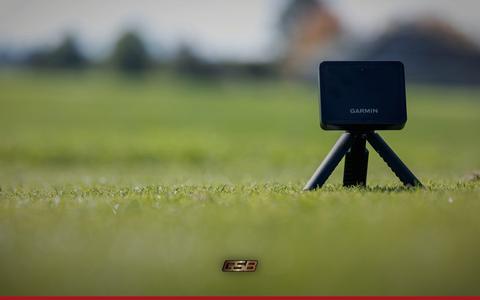
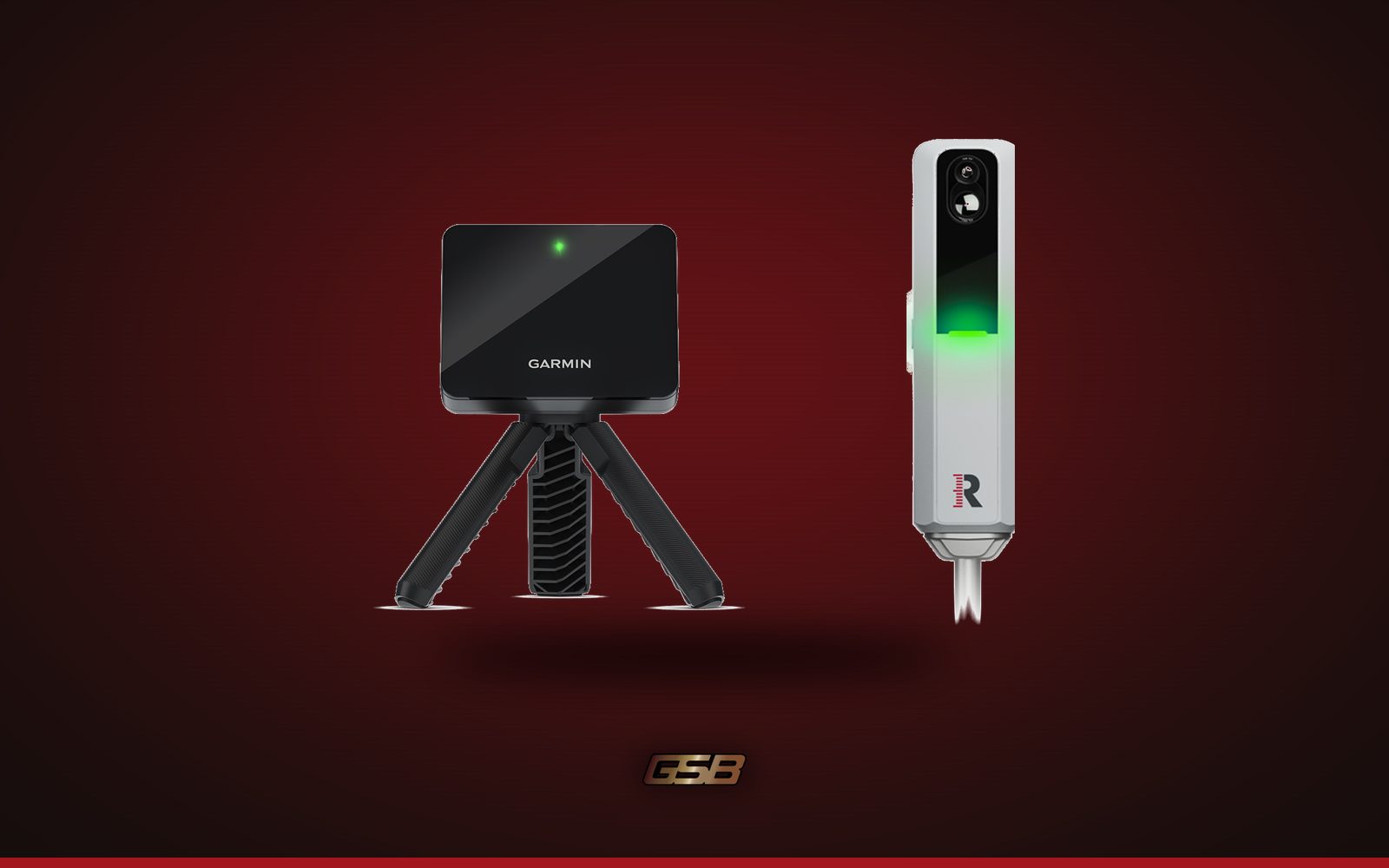
For a home golf simulator, the Rapsodo MLM2PRO is the better measuring tool and the Garmin R10 is the cheaper one to own. The R10 lists at $499.99, runs on radar and costs $99.99 a year if you want Garmin's course simulator. The MLM2PRO lists at $699.99, adds two cameras, and measures spin and spin axis when you hit Rapsodo's marked balls, but you need a $199.99-a-year membership to use it as a simulator. Neither is an overhead unit, both need a deep room, and both work with GSPro. This post compares them on the things that decide the purchase, with the Garmin Approach R50 as the third option when the room is the problem.
Prices checked November 2026.
I haven't tested either unit side by side. The figures below come from Garmin's manuals and store, Rapsodo's product and membership pages, and GSPro's supported-device list. I couldn't find an independent head-to-head accuracy test, so I don't give accuracy percentages.
Garmin R10 vs Rapsodo MLM2PRO at a glance
| Garmin Approach R10 | Rapsodo MLM2PRO | Garmin Approach R50 | |
|---|---|---|---|
| List price | $499.99 | $699.99 | $4,999.99 |
| Sale price seen Nov 23, 2026 | $399.99 (Garmin US) | $399.99 through Nov 30 (Rapsodo) | $4,499.99 (Garmin US) |
| How it measures | Radar | Radar plus two cameras | Three high-speed cameras |
| Where it sits | 6 to 8 ft behind the tee | 6.5 to 8.5 ft behind the ball | About 1.5 ft beside the tee |
| Indoor depth needed | Tee 8+ ft from net, unit 6-8 ft behind tee | About 14 ft total | Less depth, no unit behind the ball |
| Spin | Estimated indoors per owner reports; RCT balls help | Measured with RPT balls | Measured |
| Club data | Included, radar-based (see my R10 review) | Included with Core membership | Needs club stickers |
| Yearly cost for simulator play | $99.99 Garmin Golf (optional) | $199.99 Core | $99.99 Garmin Golf |
| GSPro | Supported | Supported, Rapsodo Premium needed | Supported |
| Battery | Up to 10 hours | Not listed on product page | Up to 4 hours |
Sources: Garmin's R10 and R50 product pages and owner's manuals, Rapsodo's MLM2PRO page and memberships page, and GSPro. The Garmin R50's list price is from Garmin's November 2024 launch announcement.
Which is cheaper over three years?
The R10, and the gap widens every year because Rapsodo's simulator membership costs twice what Garmin's does. At list prices:
| Cost over three years | Garmin R10 | Rapsodo MLM2PRO | Garmin R50 |
|---|---|---|---|
| Launch monitor | $499.99 | $699.99 | $4,999.99 |
| Membership, 3 years | $99.99 x 3 = $299.97 | $199.99 x 3 = $599.97 | $99.99 x 3 = $299.97 |
| Total | About $800 | About $1,300 | About $5,300 |
| Add GSPro, $250 x 3 | About $1,550 | About $2,050 | About $6,050 |
Two caveats. The Rapsodo trial covers the first 21 days of Core, so the first membership bill arrives a few weeks in. And GSPro's supported-device list notes no extra subscription for the R10, so a GSPro-only owner can skip the $99.99 entirely. If you plan to play GSPro on a PC, the R10's three-year total is the launch monitor plus $750; with an MLM2PRO it is the launch monitor plus Rapsodo's membership plus $750.
Both brands were discounted around Black Friday. Rapsodo's MLM2PRO was $399.99 through November 30, and Garmin's U.S. store showed the R10 at $399.99. At those prices the unit gap shrinks to nothing, but the $100-a-year membership gap does not.
Which measures spin better?
The MLM2PRO, with a condition. Rapsodo's page lists 15 metrics, 8 of them measured: ball speed, club speed, launch angle, launch direction, spin rate, spin axis, club path and angle of attack. It reads spin from a camera capturing frames at 240 fps, and its FAQ says golf balls with RPT markings are required to show spin numbers. With any other ball you get ball speed, launch and carry but not measured spin. Rapsodo sells RPT balls and ships a sleeve with the unit.
The R10 reads the ball with radar. Garmin's manual says the device uses its internal radar to take measurements. Indoors, with a screen 8 feet away, the radar sees only a few feet of flight, and owners on Garmin's forum say that spin is estimated with regular balls and registered as a reading with Titleist RCT balls (thread). That's a user report, not a Garmin specification, but it matches how radar units behave in a net. My R10 indoor setup guide covers the app settings that help.
For rounds with friends, both produce plausible shots and the difference shows mostly on wedges, draws and fades, where estimated spin and shot shape matter. For lessons and practice where spin axis is a number you work on, the MLM2PRO is the better buy.
How much room does each one need?
Both sit behind the ball, so both want a deep room. Garmin's R10 manual says to place the launch monitor 6 to 8 feet behind the tee, with the tee at least 8 feet from the net. Its hitting area is a 2 by 2 foot square that begins 6 feet from the unit. Rapsodo says the MLM2PRO needs "a little more than 14 total feet": 8 feet from ball to net, plus 6.5 to 8.5 feet behind the ball, and taller players may need to move it back.
That's the same footprint in practice: 14 to 16 feet of launch-monitor-to-net distance, plus swing room behind the unit and a foot or so behind the screen. Plan on 15 to 17 feet of depth, and check your ceiling and width with the room size calculator or my room dimensions guide. If the room is shallower, a unit that doesn't sit behind the ball, like the R50 or a floor camera, is the answer.
How do the software and memberships compare?
- Garmin Golf. The app is free and handles practice data. Home Tee Hero course play needs a Garmin Golf membership, listed at $9.99 a month or $99.99 a year. Garmin's R10 manual puts the course count at over 43,000.
- Rapsodo. The free tier shows 11 metrics. Core at $199.99 a year unlocks all 15 metrics including spin and club data, eight practice experiences, 30,000-plus simulated courses and extended screen play on PC. Rapsodo Studios adds 4K courses for $399.99 a year. Memberships are billed yearly only, and the first-time buyer trial is 21 days.
- GSPro. At $250 a year, it is supported by both, and by the R50. See the software comparison.
One detail to watch: Rapsodo's page says Core is the membership for both the MLM2PRO and its newer MLM2XPRO ($899.99), and its lifetime-membership offers are tied to hardware transfer deadlines. I couldn't confirm that a lifetime membership is still on sale for the MLM2PRO, so I priced yearly Core.
How do you get either one onto a projector?
Both are phone-first devices, which matters when you build the room around them. Rapsodo's page says that for projection from an iPhone or iPad you use a Lightning-to-HDMI cable, from an Android device a USB-C-to-HDMI adapter, and for a smart TV you use AirPlay or screen mirroring. Rapsodo also runs a PC app for its Studios courses and extended screen play, and GSPro runs on a Windows PC for both brands. Garmin's R10 pairs with the Garmin Golf app on a phone or tablet, and the R50 has its own screen and can output to a projector or external display.
The practical rule: if you only ever want one program on one screen, a tablet and an HDMI adapter is enough. If you want GSPro or a second display, budget for a gaming PC, and see my golf simulator computer guide for what GSPro asks for. A cable that reaches the projector is a small cost; the cost guide's list of forgotten costs includes it.
Where does the Garmin R50 fit?
The R50 launched in November 2024 at $4,999.99. It uses three high-speed cameras, a 10-inch touchscreen and a battery rated up to four hours, and Garmin's manual puts it about 1.5 feet beside the tee, not behind it. Garmin says club data needs club stickers, and virtual rounds need a Garmin Golf membership. GSPro lists it as supported with no extra subscription.
It solves the depth problem and gives measured spin without marked balls, but it costs about ten times an R10. Buy it if your room is shallow and you want a portable, self-contained camera unit. If you're budgeting for a permanent room, compare it with the units in my best golf simulator launch monitors list, where an overhead or floor camera unit costs about the same and gives you more.
Which should you buy?
| If this is you | Buy |
|---|---|
| Lowest total cost, practicing at the range as well | Garmin R10 |
| Only plan to run GSPro | Garmin R10 (no Garmin membership needed) |
| Spin axis and club path are numbers you work on | Rapsodo MLM2PRO |
| Want measured spin and can live with marked balls | Rapsodo MLM2PRO |
| Room is shallower than about 15 feet | Garmin R50, or a floor camera unit |
| Permanent room, budget over $5,000 | Look at overhead units instead |
If the answer is the R10, my best golf simulator under $5,000 build shows what to put around it, and the Garmin R10 review goes deeper on the unit. The budget builder adds the subscription years for you.