
Camera-based launch monitors: how they measure spin
How camera-based (photometric) golf launch monitors measure ball spin and club data, floor vs overhead placement, pros and cons, and current examples.
- Updated
- Read
- 4 min
In this guide 7 sections
- How does a camera launch monitor measure ball spin?
- How do camera units measure club data?
- Floor or overhead: where does a camera launch monitor go?
- Does lighting or ball position affect a camera launch monitor?
- What are the pros and cons of camera launch monitors?
- Which camera launch monitors are available in 2026?
- Questions people ask
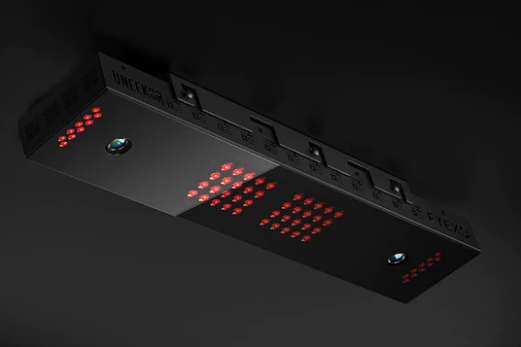
A camera-based launch monitor (also called photometric) uses high-speed cameras to photograph the ball and club in the first few inches after impact, then calculates speed, launch, spin and the rest of the flight from those images. It never watches the ball fly. Because all the measuring happens right at the ball, a camera unit needs no space behind the golfer and reads indoor spin more directly than radar. That makes it the usual pick for a dedicated indoor simulator. For how cameras compare with radar, see my radar vs camera vs overhead guide.
How does a camera launch monitor measure ball spin?
When the club strikes, the unit fires a burst of images, typically lit by its own infrared flash. The ball has moved only a few inches between the first and last frame. The software compares the frames to get three things:
- Speed: how far the ball traveled between frames, divided by the time between them.
- Launch angle and direction: the line the ball traveled in those frames, up and sideways.
- Spin and spin axis: how far the dimple pattern or ball markings rotated between frames, and around which axis.
Units with two or more cameras see the ball from different angles, which gives a true 3D position instead of an estimate from a single view. Foresight's GCQuad uses four cameras; the GC3 and Bushnell Launch Pro use three; the Square Golf Omni uses four.
Radar has to infer spin from a short indoor flight, which is why it often needs marked balls. A camera reads it off the ball, so a clean, premium ball is usually enough.
How do camera units measure club data?
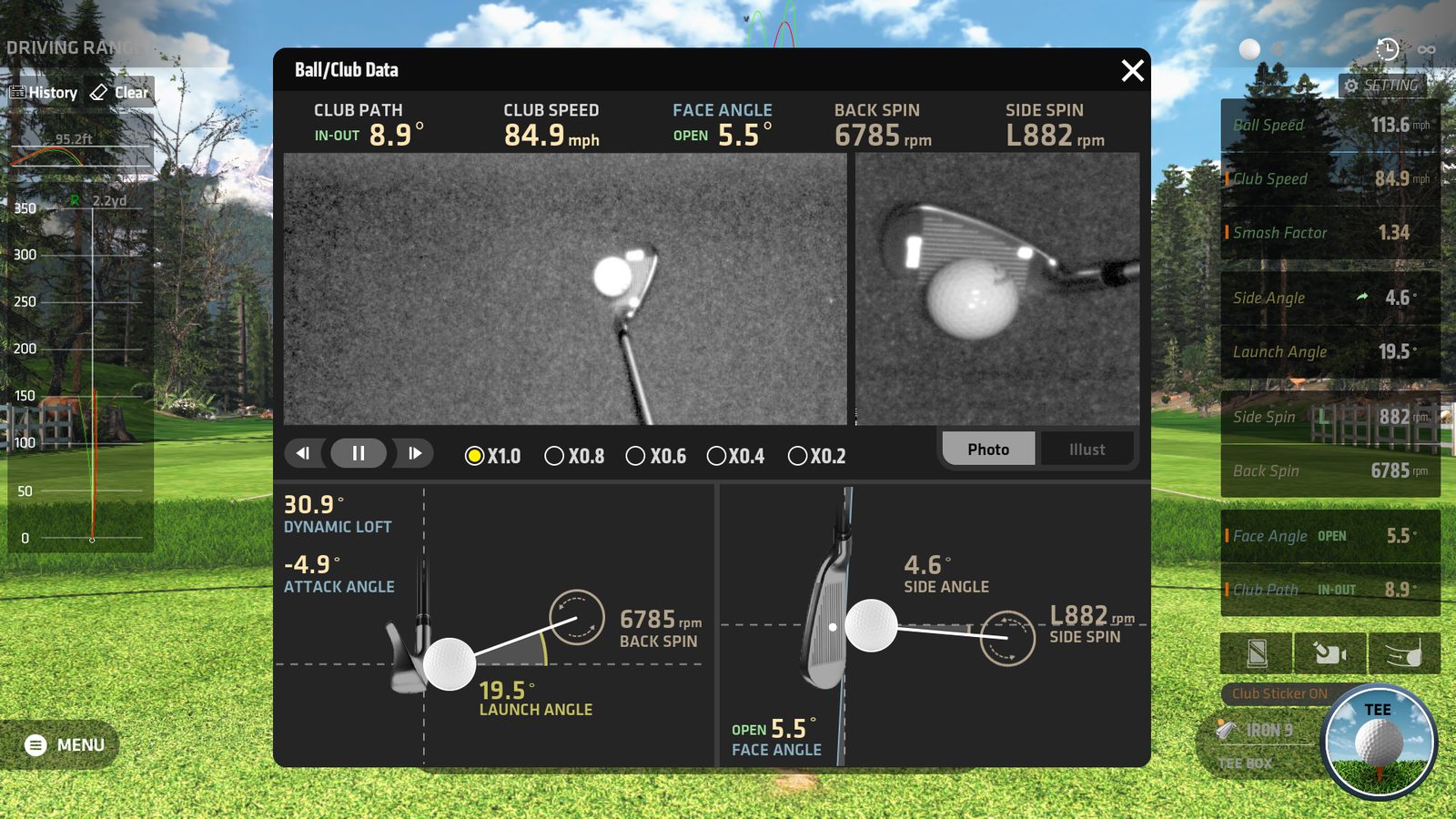
The same images capture the clubhead just before and at impact. From them the software reads club speed, path, face angle and attack angle, and on better units dynamic loft and impact location on the face.
There are two ways to do it:
- With markers: small reflective stickers on the club face give the cameras fixed points to track. This is accurate but means putting stickers on every club you want measured. The Uneekor EYE XO2 needs stickers for some club numbers.
- Without markers: newer units recognize the club face shape directly. The ProTee VX and Uneekor EYE XR read club data with no stickers, and the VX builds an impact heat map across a session.
Some units also save slow-motion impact video or an overhead image of each strike, which is useful for seeing heel and toe contact.
Floor or overhead: where does a camera launch monitor go?
Floor units
A floor unit sits on the ground beside the ball, facing the golfer. It's portable, so you can take it to the range or pack it away in a garage. Setup is a few minutes of aligning it to the target.
The catch is handedness. The unit must sit on the golfer's side of the ball, so a left-handed player means moving and re-aligning it. It's also on the floor where a bad shank can hit it.
Overhead units
An overhead unit mounts on the ceiling, usually at about 9 to 10 feet, and looks down at the hitting area. It sees both sides of the ball, so left- and right-handed players can alternate shots with no changes. Nothing sits on the floor. Once it's calibrated, it stays put.
The trade-offs are a permanent install, a minimum ceiling height and a higher price. Most current overhead units cost from about $5,500 to $20,000.
Does lighting or ball position affect a camera launch monitor?
Less than it used to. Most current units light the ball with their own infrared flash, so ordinary room lighting, LED panels and pendant fixtures rarely matter. Strong direct sunlight on the hitting area, such as through an open garage door late in the day, is the more common cause of missed reads, and it's worth testing before you commit to a spot.
Ball position matters more. Every camera unit has a hitting zone it can see clearly. Floor units want the ball a set distance from the unit, usually marked in the setup guide. Overhead units have a rectangle on the mat; the ProTee VX's is about 25 x 21 inches. Tee the ball outside it and the unit either misses the shot or reads it badly. Mark the zone on your mat once the unit is calibrated.
What are the pros and cons of camera launch monitors?
| Pros | Cons |
|---|---|
| No space needed behind the ball | Floor units must move for left-handed players |
| Spin read directly at impact, no marked balls | Flight is calculated, not tracked |
| Fast shot display, low delay | Some need club stickers for full club data |
| Club data and impact images on many units | Overhead units need a 9-10 ft ceiling and a permanent mount |
| Works in basements and short garages | Several brands charge yearly fees for full software |
Which camera launch monitors are available in 2026?
| Model | Placement | Price (about) |
|---|---|---|
| Square Golf Omni | Floor | $1,599 |
| Uneekor EYE MINI | Floor | $1,999 (list $4,500) |
| Bushnell Launch Pro | Floor | $2,999.99 |
| Garmin Approach R50 | Floor | $4,999 |
| Foresight GC3 | Floor | $6,999 list, often about $4,000 |
| Uneekor EYE XR | Overhead | $5,499 (with cameras) |
| ProTee VX | Overhead | $6,500 |
| Uneekor EYE XO2 | Overhead | $7,999 (with cameras) |
| Foresight Falcon | Overhead | $14,999 list |
| Foresight GCQuad | Floor | $15,999 |
| Foresight GCHawk | Overhead | $19,500-20,000 |
The ProTee VX is the lowest-cost mainstream overhead option and includes two swing cameras with no subscription for its own software. Foresight covers the most price points, from the GC3 to the GCHawk. The Trackman iO also mounts overhead and uses cameras, but pairs them with radar, so it's a hybrid rather than a pure camera unit. My older EYE Mini review covers Uneekor's floor unit.
For picks by budget and room, with a full comparison table, see my best golf simulator launch monitors list. To compare cameras with radar and decide which type fits your room, start with the launch monitor guide.
Prices checked November 2026.